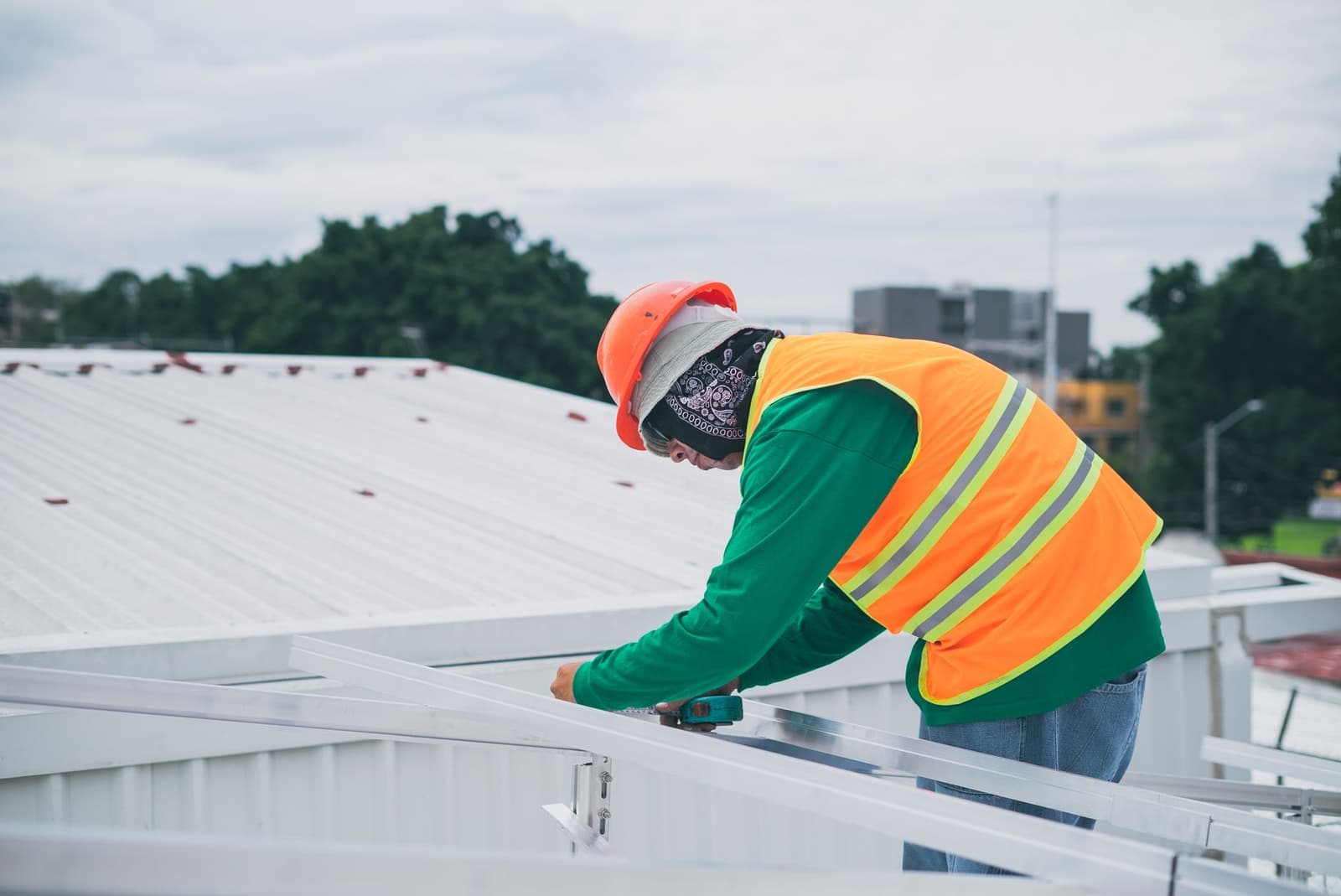
In Los Angeles, rain arrives in a narrow band of months, so the sensible window for a roof replacement is the dry stretch ahead of it. An open tear-off leaves only the deck and old underlayment between the house and the sky, and the dry months are when that is least risky.
What the rainfall normals show
Downtown Los Angeles receives 14.25 inches in a normal year, going by the 1991 to 2020 normals of the National Weather Service. Of that, 12.42 inches arrive from November through March, which is about 87 percent, and February alone averages 3.64 inches. June to September together add almost nothing.
At the edges, October averages 0.58 inches and November 0.78. Those two months are the hinge between the dry half of the year and the wet half.
Why the calendar tightens after the first storm
Roofing demand does not spread evenly across the year, and the news record shows both ends of it. ABC7 described, on 7 Nov 2015, homeowners hurrying to replace roofs before forecast El Nino rain. FOX 11 described the other end on 2 Mar 2023: people unable to get a roofer to call back once storms had hit.
A replacement booked in the dry months avoids that scramble. One booked in a downpour competes with every leak in the county.
Working back from November
Count backward from the first expected storm. The assessment comes first, since it fixes the scope. The written scope follows, then the permit path for your address, then the choice of covering and the order for materials. Dates for the work come last.
Each step takes time that is hard to compress, and the first four have to happen before anyone can schedule the fifth. Starting in the dry months leaves slack for the one step that cannot be rushed, which is the weather.
A tear-off in wet weather, layer by layer
Once the covering is off, the deck is the barrier. Rain on exposed boards soaks in, swells them and stains the framing, and it can reach the ceiling below. The risk lives in the gap between tear-off and the moment new underlayment covers the deck.
That gap is why a replacement is staged by slope or section when the sky is uncertain. Each stretch is opened and closed in turn, so the house is never more exposed than the day's forecast allows.
Metal and the sound of rain
Rain on metal is louder than on tile or shingle when nothing sits beneath the panels. Solid decking, underlayment and attic insulation take much of that sound out, and a metal roof built over them is a different experience from a bare shed roof.
So the answer depends on the layers under the metal, which is the same lesson as everywhere else on the roof.
Questions about roofing and rain
What can go wrong with a tear-off in wet weather?
The deck and the rooms beneath take on water, boards swell and stain, and the schedule slips while everything dries. Staging by section limits how much of the roof stands open.
Is rain louder on a metal roof?
It can be, when the panels sit over little or nothing. With a solid deck, underlayment and attic insulation beneath, much of the sound is absorbed.
What happens to roofer calendars after the first storm?
The phones get busy. ABC7 (2015) reported the rush before forecast rain, and FOX 11 (2023) reported the struggle for callbacks after storms.