Shingle roof replacement removes the worn asphalt shingles and puts a new roof on a prepared deck. The shingles are the visible wear layer, and they are the first to show their age. What lies below them decides how long the replacement will last.
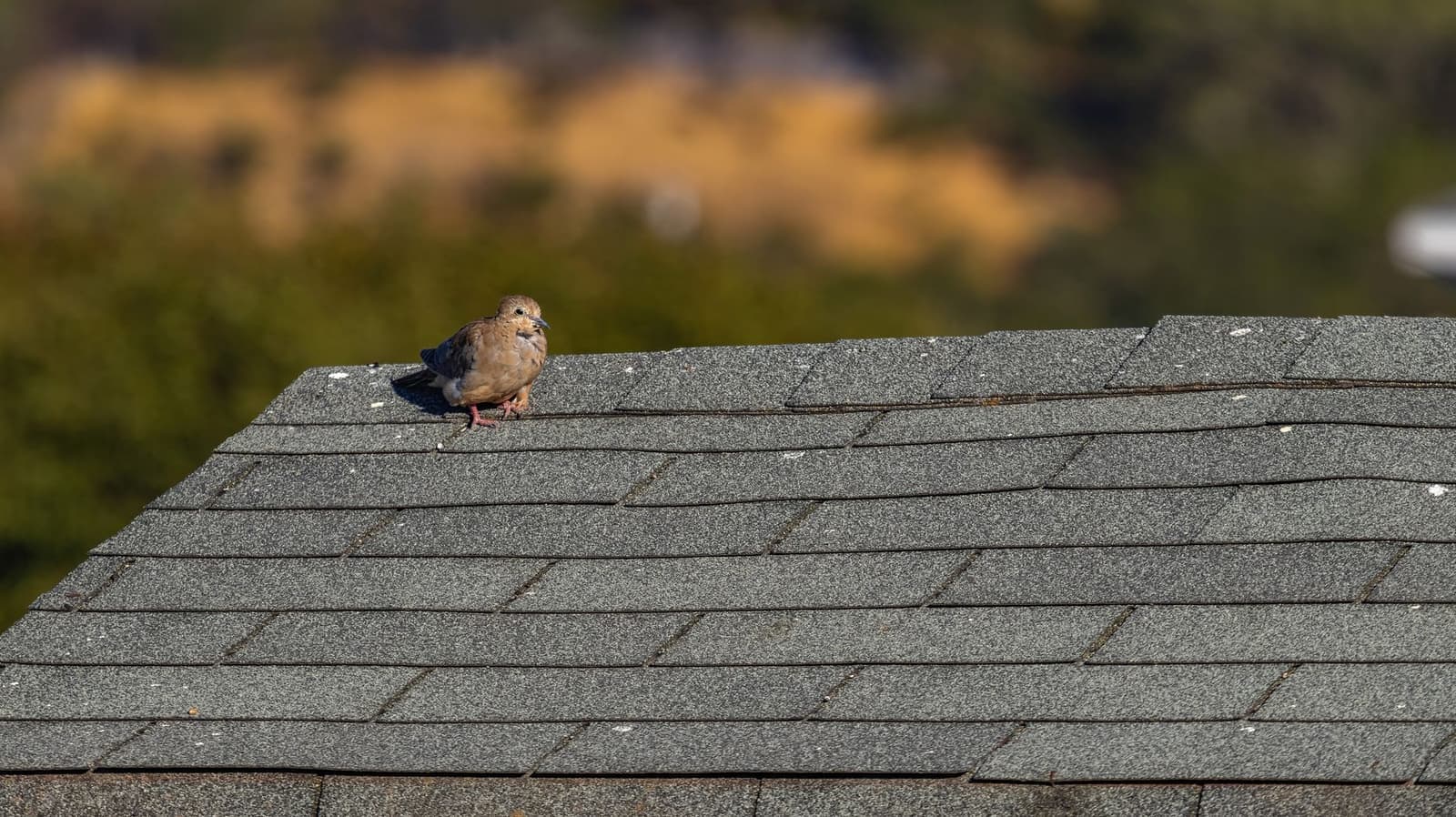
A wear layer sitting on top of a waterproofing layer
An asphalt shingle is a mat coated with asphalt and topped with mineral granules. The granules shield the asphalt from sunlight. As they loosen and wash into the gutters, the asphalt is exposed and the shingle ages faster.
Beneath the shingles, the underlayment is the true waterproofing. It is protected by the shingles above, so it often looks fine when the surface is worn. Both layers are replaced in a full job.
Reading a shingle roof's age from the ground and the gutter
Granules in the gutter, bare areas on the south-facing slopes, curled or cracked tabs and exposed nail heads all point the same way. Lifted flashing at chimneys and walls tells you the sealant has given up.
None of these proves the deck is sound. The tear-off settles that, and the scope should say what happens if boards are soft.
What a shingle replacement includes
- All existing shingles removed down to the deck
- Deck inspection, with soft or damaged boards replaced
- New underlayment across the full roof
- New flashing at walls, chimneys, valleys and vents
- New shingles installed with the fastening pattern stated in the scope
- Ridge and edge details finished, then the permit inspection
Signs the shingles have run their course
- Granules gathering at the downspouts
- Tabs that curl, crack or lift in a breeze
- Dark, bare areas on the sunniest slopes
- Stains inside that come back after earlier work
Cool shingles and the energy code
Pasadena sits in climate zone 9. Under the state energy code, a steep-slope reroof in that zone has to meet the cool roof values once work passes 50 percent of the roof, unless an exception applies (California Energy Commission, 2022 Standards). Each product's CRRC label shows whether it meets those values.
The City of Los Angeles has a separate residential rule. Cities outside it follow the state code.
Tear-off or a second layer
Where County rules apply, a second layer of roofing is permitted only on a roof that carries a single layer already, with a sound deck and adequate framing (LA County Public Works, BCM 1512, 1 Apr 2025). The energy code counts an overlay the same as a replacement.
In practice a full tear-off is the sounder plan, since it lets the underlayment and flashing be replaced along with the shingles. Angi's 2026 Los Angeles page puts asphalt roofing at about $8.50 per square foot.
Questions about shingle roofs
How do shingles fare when a Santa Ana wind blows?
The edges lift first, so the fastening pattern, the starter course along the eaves and the sealing strips matter more than color. Ask the scope to state the nailing method and the wind rating of the product.
What does granule loss tell you about a shingle roof's age?
It shows the shield over the asphalt is thinning. Granules in the gutters and bare dark areas mean the shingle is aging faster than it was. United Policyholders reported on 3 May 2025 that re-underwriting letters to owners have cited worn shingles and granule loss.
Does a shingle roof's age change a homeowner's insurance options?
It can. A report by Insurance Business America (26 May 2026) says Mercury and Wawanesa generally decline homes whose roofs top 25 years, except tile and slate. The same Insurance Business America report (26 May 2026) adds that, past 15 years, Farmers may pay only actual cash value on an asphalt roof. Ask your own insurer what applies to your policy.
Do replacement shingles need to be cool rated?
In zone 9 they do when the reroof passes 50 percent of the roof, unless an exception applies (California Energy Commission, 2022 Standards). The product's CRRC label shows its values. The City of Los Angeles keeps its own residential rule.
Should I get class 3 or class 4 shingles?
The class 3 and class 4 grades are scored by dropping steel balls to imitate hail, and class 4 is the tougher grade. What matters for your roof is what actually lands on it. Ask what the extra grade would add for your trees, your slope and your budget.